Living Photos: How Augmented Reality Brings a Photo Album to Life
What living photos are, how a phone turns a printed picture into video, and why viewers don't need an app. AR explained simply for photographers and clients.
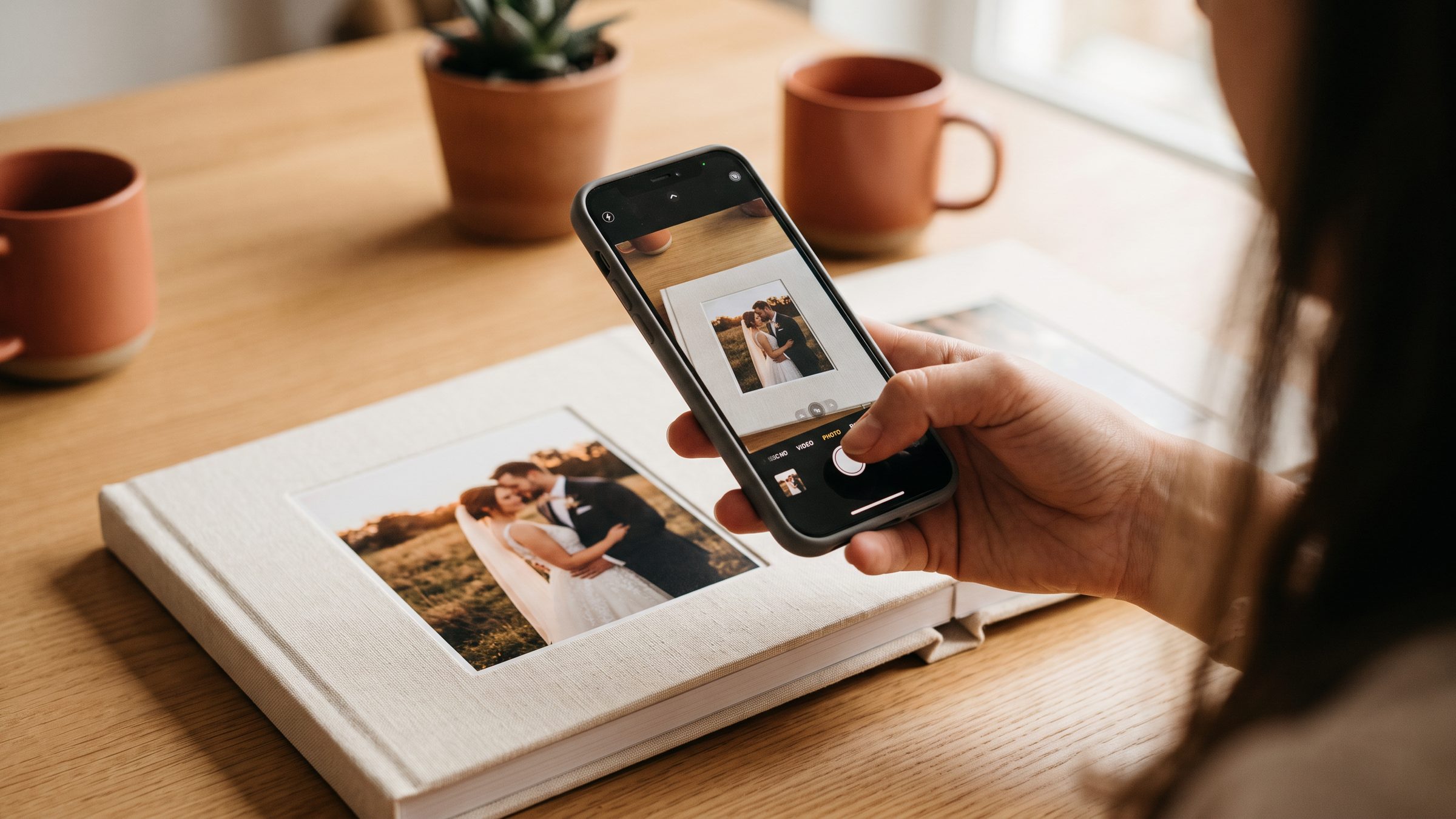
You point your phone at a photo in an album and it comes alive: the people in the picture start moving, and you hear music or a voice. It isn't a trick or special ink. It's augmented reality (AR): the phone recognizes the photo and overlays a video that lines up exactly with the edges of the print.
What viewers see
- They open the phone camera and scan the QR code in the album.
- The album page opens in the browser and asks for camera access.
- They point the phone at any living photo and the video plays right on the page.
One QR code covers the whole album: flip the pages and point the camera at the next photo. There's nothing to install: the regular iPhone or Android camera is all it takes.
What happens behind the scenes
When a photographer uploads a photo, the service finds hundreds of distinctive points in it: corners, contrasts, fine details. Together they form the picture's "fingerprint." The phone camera looks for that fingerprint in real time, works out the position and angle of the print, and draws the video on top of it. That's why the video stays "stuck" to the page even when you tilt the album.
Each video is cropped to the photo's proportions in advance and compressed so it loads quickly over mobile data.
Browser or app?
For most viewers the browser is enough: Safari on iPhone or Chrome on Android. The free app is for people who come back to the album often: tracking is steadier, and you can save the album to watch offline.
Where living photos work best
- Graduation albums and yearbooks: the prom dance, the first day of school, words from teachers.
- Preschool and kindergarten albums: school shows, little poems, first dances.
- Wedding photo books: vows, the first dance, toasts.
- Cards and thank-you notes: one living photo on a hundred identical cards.
- School displays and brochures: achievements, history, open house days.
Is it safe?
Only someone holding the album with its QR code can see the videos. Album pages aren't indexed by search engines, and files are stored under random names. For photos and videos of children, the photographer gets parental consent, just as for any regular shoot.
How much it costs
The photographer pays for each living photo once, when the album is activated. However many copies you print and however many times the album is opened, there's nothing more to pay. See the Pricing page for details.
A living photo doesn't replace print. It adds what paper can't: motion, voice and music.